Wood
It’s well past time to have this year’s firewood split, stacked, and covered, but I still have a way to go. It’s already late summer. On the forest edge, a load of hardwood logs has been reduced to a good pile of rounds, but even if I get it split before Halloween, it won’t be dry enough to burn this year. I’m coming around to the idea that I’ll need to buy a cord or two just to get through. If I’m feeling flush, maybe kiln-dried wood, the kind that burns so hot it can crack a cast-iron stove if you’re not careful.
We don’t heat our whole house with wood, but we burn enough to knock the edge off and keep the oil bill in check. We go through a couple cords a year. We cut some off our own woodlot, mostly standing dead wood that we can burn right away. We trade for some now and then, but often we wind up buying, late in the season and at a premium, scrambling to stack it before the snow flies. This year’s log load was a first step toward something more grown-up and strategic. But as you can see, I haven’t quite executed.
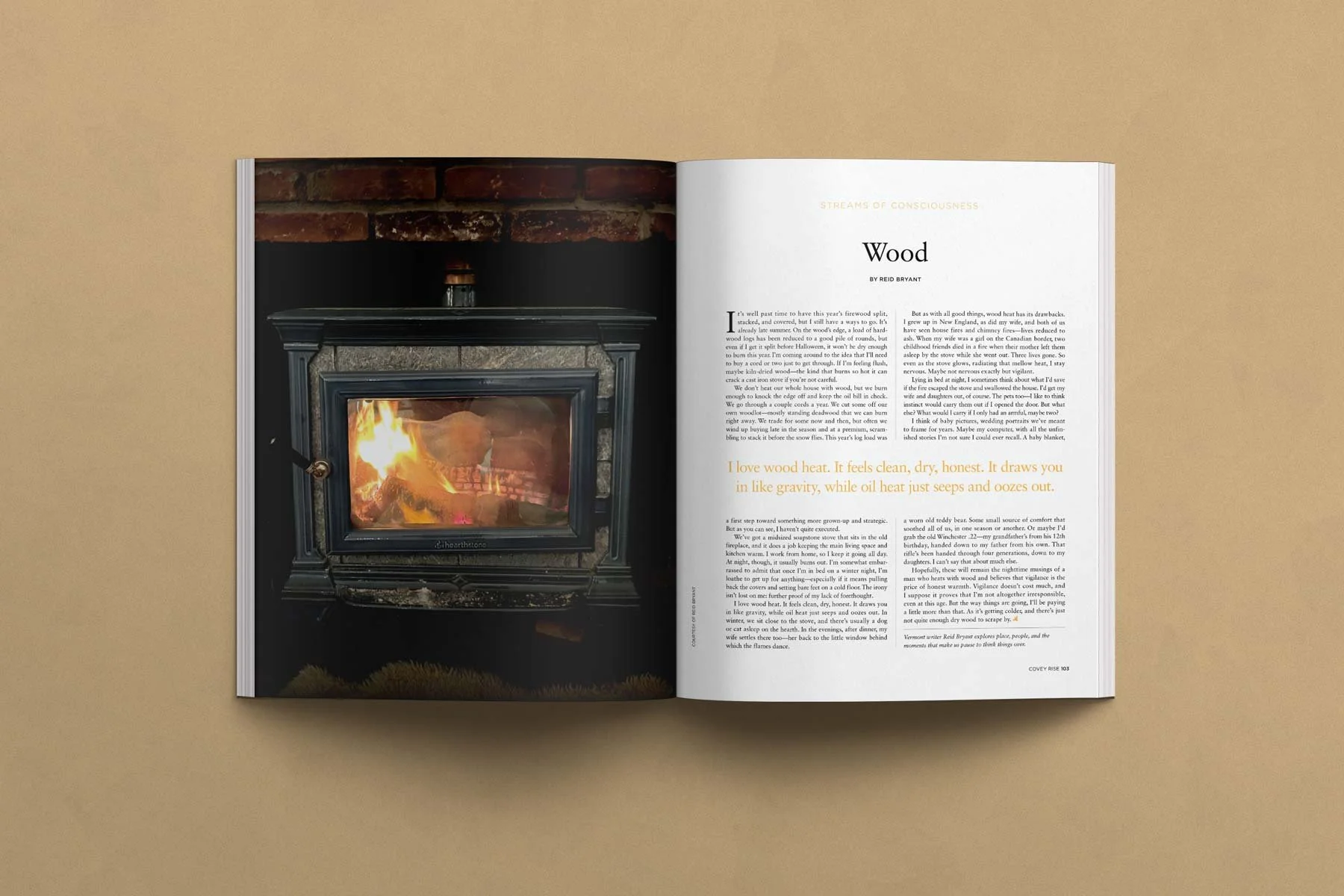
We’ve got a mid-sized soapstone stove that sits in the old fireplace, and it does a job keeping the main living space and kitchen warm. I work from home, so I keep it going all day. At night, though, it usually burns out. I’m somewhat embarrassed to admit that once I’m in bed on a winter night, I’m loathed to get up for anything, especially if it means pulling back the covers an setting bare feet on cold floor. The irony isn’t lost on me: further proof of my lack of forethought.
I love wood heat. It feels clean, dry, honest. It draws you in like gravity, while oil heat just seeps and oozes out. In winter we sit close to the stove, and there’s usually a dog or cat asleep on the hearth. In the evenings, after dinner, my wife settles there too, her back to the little window behind which the flames dance.
But as with all good things, wood heat has its drawbacks. I grew up in New England, as did my wife, and both of us have seen housefires and chimney fires, lives reduced to ash. When my wife was a girl on the Canadian border, two childhood friends died in a fire when their mother left them asleep by the stove while she went out. Three lives gone. So even as the stove glows, radiating that mellow heat, I stay nervous. Maybe not nervous exactly. Vigilant.
Lying in bed at night, I sometimes think about what I’d save if fire escaped the stove and swallowed the house. I’d get my wife and daughters out, of course. The pets too. I like to think instinct would carry them out if I opened the door. But what else? What would I carry if I only had an armful, maybe two?
I think of baby pictures, wedding portraits we’ve meant to frame for years. Maybe my computer, with all the unfinished stories I’m not sure I could ever recall. A baby blanket… a worn old teddy bear. Some small source of comfort that's soothed all of us, in one season or another. Or maybe I’d grab the old Winchester .22, my grandfather’s from his twelfth birthday, handed down to my father on his own. That rifle’s been handed through four generations, down to my daughters. I can’t say that about much else.
Hopefully, these will remain the nighttime musings of a man who heats with wood and believes that vigilance is the price of honest warmth. Vigilance doesn’t cost much, and I suppose it proves that I’m not altogether irresponsible, even at this age. But the way things are going, I’ll be paying a little more than that, as it’s getting colder, and there’s just not quite enough dry wood to scrape by.
Forst Published in Covey Rise Magazine